

What can we expect from Space Tourism in 2026 ?

The end of 2025 was marked by two significant events: On Saturday, December 20, Michaela Benthaus, a 33-year-old German aerospace and mechatronics engineer at the European Space Agency, became the first person in a wheelchair to cross the Kármán line, located 100 kilometers (62 miles) above sea level.
 SpaceX ends 2025 on a high note. Elon Musk’s company ended 2025 with 165 successful missions of its Falcon 9 rocket, shattering its own 2024 record of 134 launches.
China, for its part, carried out 88 orbital launches in 2025, a remarkable pace without reuse. But compared to SpaceX’s 165 launches, the gap remains enormous.
So, if 2025 ended on such a high note, what can we expect from 2026, if indeed we can even attempt to make predictions in the space sector, given the industry’s rapid growth, especially considering the continued secrecy surrounding it, particularly in China, and perhaps even India and Russia.
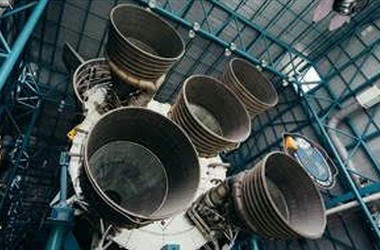 The global space tourism market is expected to reach between $1.5 and $1.6 billion by 2025, with projections indicating sustained growth over the next decade.
In 2026, several countries and sectors will be worth watching: The United States will be more prominent than ever in setting the pace.
With President Trump’s signing of the « Ensuring U.S. Space Superiority » executive order on December 18, 2025, the course is now clear: a return to the Moon in 2028 and a permanent base by 2030.
It is this plan, which also relies on nuclear energy, orbital defense, and a reform of NASA’s budget, that will guide the United States’ space policy for 2026.
 Needless to say, given that the Americans fear the Chinese might want to set foot on the Moon as early as 2029 to celebrate the 80th anniversary of the Revolution, this race to return to the Moon will dominate space policy. International.
Thus, the news will focus on the results, progress, and development of the program concerning SpaceX’s giant rocket, namely: Starship.
The development of space tourism flights.
 As announced in May 2025, Virgin Galactic has confirmed its intention to launch tourist flights in 2026 with its next-generation « Delta-class » spaceplane.
The first research and test flights are expected to take place as early as summer 2026, followed by the first flights for « private astronauts » in the fall of 2026.
The ticket price, expected to reach approximately US$600,000—a slight increase from the previous US$450,000—will reveal whether Virgin Galactic is on track to succeed.
As for Blue Origin, Steve Bezos’s company is expected to continue its New Shepard suborbital flights, which remain occasional but constitute the other major offering of short flights beyond the Kármán line.
Regarding SpaceX, we shouldn’t expect a surge in private flights, as Elon Musk is more focused on the development of his giant Staship rocket within the Artemis project.
Balloon Flights
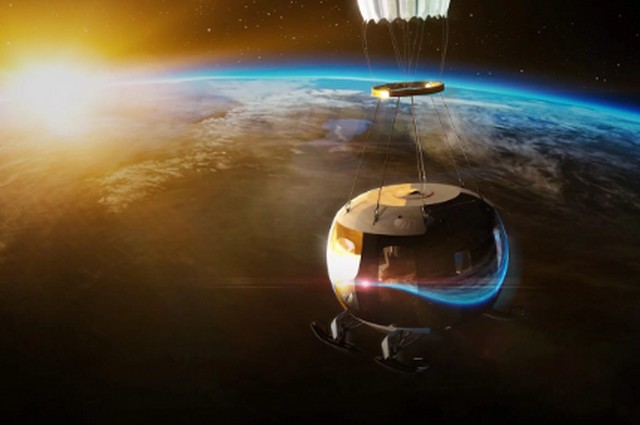 EOS-X Space, World View, and Halo Space are aiming for stratospheric balloon flights (30–40 km altitude) by 2026, at prices significantly lower than rockets, but without reaching orbit. This is a developing story…
Regarding the two French companies, Zephalto, which has received support from CNES, ESA, and Charles Beigbeder’s Geodesic Fund, and Stratoflight, in partnership with Expleo, barring a miracle, they are not expected to conduct their first flights before 2027.
Space Hotels
Orbital and « space hotel » projects are still in the planning stages, with initial openings no earlier than 2027 and stays still expected to cost several million dollars.


On the same subject

The arid sand of the desert transformed into fertile soil : True or false ?
It’s already a technological reality in 2026: transforming the arid desert sand into arable...

Our greatest pride
Considered the crown jewel and greatest technological achievement of modern China, the Fujian (Type...

Eternal Glass : Microsoft unveils storage technology capable of lasting 10,000 years
At a time when our current hard drives and servers are showing signs of...


