

The battle intensifies
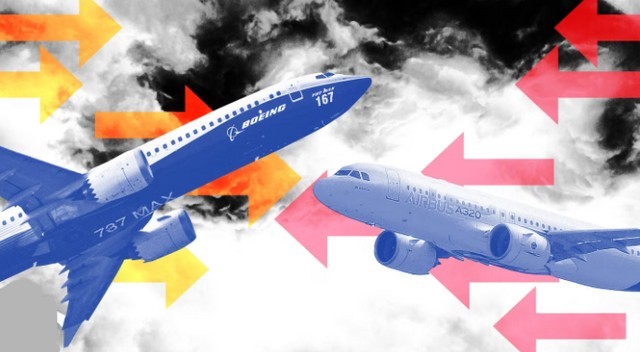
How else can we describe the battle being waged by aircraft manufacturers? I’m not just talking about Airbus and Boeing, but also engine manufacturers, equipment suppliers, and newcomers, particularly Chinese ones, not forgetting Embraer and even ATR.
The figures published by ID Aero, whose analyses are considered authoritative, are rather staggering. The stakes are high. The sums involved are so vast that it’s difficult to grasp them.
Let’s get down to the numbers. It’s estimated that 26,750 aircraft are currently in commercial service worldwide.
Aircraft manufacturers, Boeing in particular, predict that the airline fleet will reach 50,000 aircraft by 2044—less than 20 years away—representing a doubling of the number of planes. But that’s not all; the average size of aircraft is steadily increasing.
It has grown from 50 seats in the 1950s to 100 seats 20 years later, and now to 200 seats. And aircraft are flying farther and farther.
It’s also worth noting that the average price of a commercial aircraft is around $100 million.
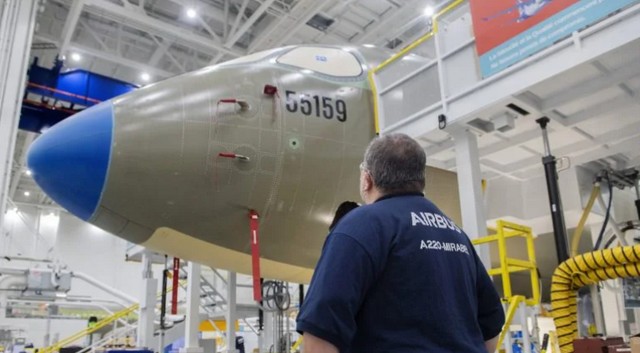 All of this is very approximate because there is a huge difference between the list price and the amount actually paid by buyers, a difference that is reflected not only in the airframes but also in the engines.
So in this context, the two giants are obviously Airbus and Boeing.
The company was brought to its knees by a series of disastrous decisions made in recent years that prioritized stock prices over the company’s core mission.
The price to pay has been enormous, resulting in two fatal accidents that killed nearly 300 passengers, not to mention numerous other incidents that could have increased that number.
 It should also be noted that Boeing has just been ordered to pay $28 million to the heirs of a victim of the Ethiopian Airlines crash.
Let’s hope for the manufacturer’s sake that this doesn’t have a snowball effect.
The new leadership of the American giant, headed by Kelly Ortberg, an engineer rather than a financier, has gotten back on track.
At the end of October, Airbus still had 8,698 aircraft on order and Boeing 6,534, and the number of orders is set to increase further for both companies following the Dubai Air Show.
At $100 million per unit, the sales figures are staggering: over $1.5 trillion, which is roughly one and a half times the total revenue of the airline industry in 2025.
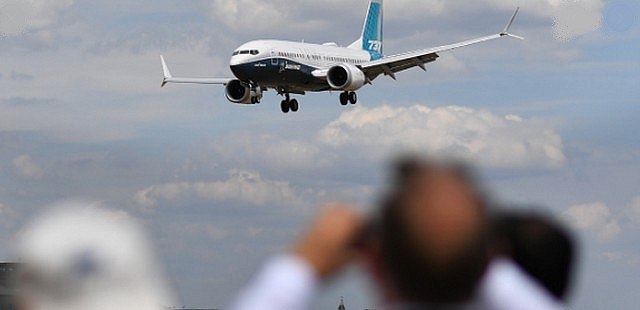
The competition between the two manufacturers is all the more interesting because they have directly competing offerings: the B737 MAX for one and the A320 for the other in the medium-haul category, and the A350 against the B777X in the very large aircraft segment.
The characteristics are almost identical, except that Airbus has a significant advantage with the A350, which has been on the market for a long time, while the B777X is not yet certified and will be nearly 15 years behind its competitor when it enters service.
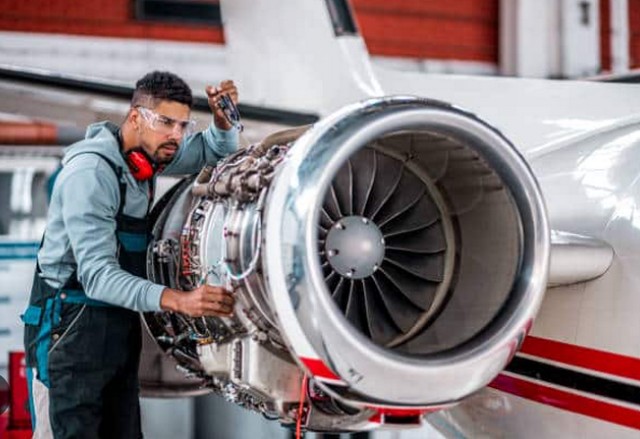 And the competition doesn’t end there. Engine manufacturers hold a significant portion of the power.
Three of them are in the running: Rolls-Royce, which specializes in very large engines, is closely followed by GE, which is developing an even larger engine to power the B777X.
The competition is also fierce for smaller engines. Prices are also enormous: a very large engine can cost over $40 million. So, engine manufacturers often offer lease options.
For the smallest engines used on medium-haul aircraft, the lease rate is around €200,000 per month.
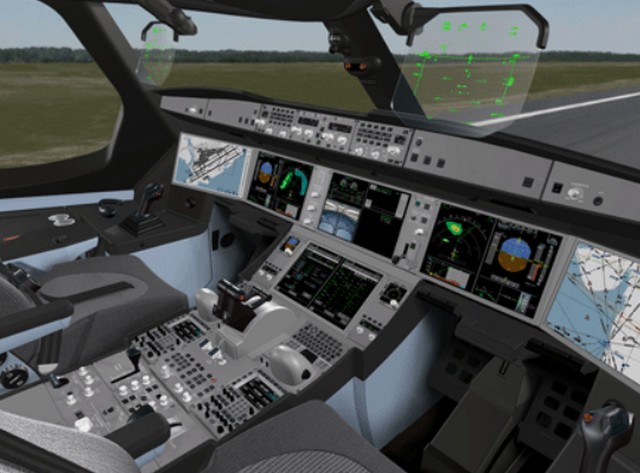 The French company Safran, in partnership with General Electric, has become a major supplier in this category, along with the American company Pratt & Whitney.

On the same subject

Indigo Airlines : Why the CEO is throwing in the towel
Indian airline giant Indigo Airlines is going through a period of significant turbulence following...

Aeromexico fears the negative consequences following El Mencho’s death
Andrés Conesa, the CEO of Aeromexico, expressed his deep concerns during a high-level meeting...

Sky news: Latam, China Eastern, Emirates, Qatar Airways, Etihad Airways, Plus Ultra, Lufthansa, etc.
In the Persian Gulf, Emirates anticipates a return to normal service for its network...


