

Towards the transformation of low-cost airlines
It’s very interesting to follow Southwest Airlines’ results. It’s the benchmark airline in the « low cost » sector. It was the first airline to enter this field in 1971, experiencing enormous growth following the liberalization of US airspace in 1978, and it is also the largest in terms of revenue: $27.5 billion, even though the European airline Ryanair carries more passengers.
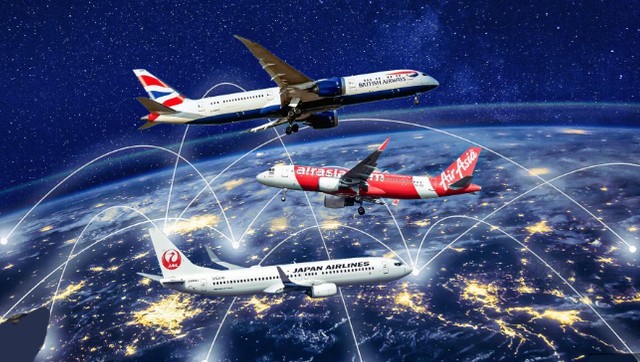 The fundamentals of the model rest on a few intangible principles: a single type of aircraft, faster turnaround times, increased aircraft capacity, no outsourced distribution, very low introductory prices, a very basic product with all services charged separately, all delivered by a young, enthusiastic, and well-paid staff.
With this model, Southwest Airlines soared to the top of the US domestic carriers, posting remarkable results.
But then time took its toll. The staff aged, became less efficient, and demanded and obtained benefits ultimately comparable to those of traditional carriers.
And the results suffered. Not that the company lost money, but profits declined, and more seriously, the stock price began to fall steadily, which didn’t sit well with shareholders, especially investment funds.
These shareholders demanded a change in management, and the new management adopted a very different strategy.
 In fact, the new management has shifted the pure « low-cost » model towards a hybrid system.
To begin with, distribution expanded to travel agents via GDSs, and then the company entered into « interline » agreements, something unprecedented.
The product improved, and consequently, costs also increased. Overall, the bottom line was also negatively impacted, with a
downturn of 42%.
And surprisingly, the share price has soared by more than 70% compared to its low, and the company is valued at 46 times its anticipated earnings.
Compared to Air France/KLM’s results, this would value the group at $16.3 billion instead of the current $3.63 billion, and let’s not even mention Emirates Airlines, whose valuation on this basis would exceed $230 billion.
In other words, the stock market, anticipating future results, has complete faith in the strategic shift of low-cost carriers, whose product will gradually converge with that of traditional airlines, which have taken the opposite path.
 Certainly, after hitting rock bottom just before Covid, the revenue of legacy carriers has been trending upwards.
This was indeed necessary because, even though their product was degraded, operating costs continued to rise, and customers no longer hesitated to switch to competitors who clearly offered a much simpler service.
Therefore, it’s easy to imagine that the American example will be followed, albeit with some delay, by European and then Asian carriers.
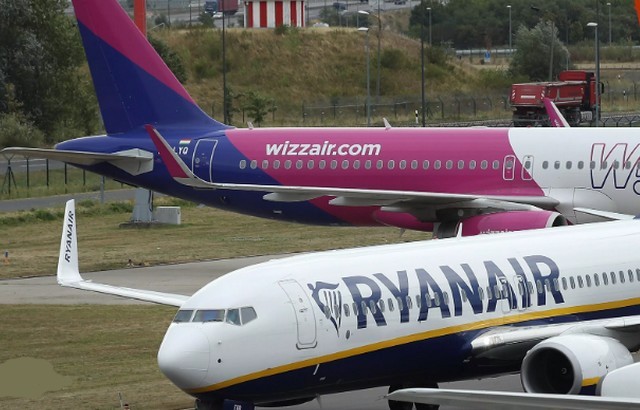 We are starting to see the European leader Ryanair not hesitating to cut routes as soon as their profitability is no longer guaranteed.
EasyJet is also following the same path.
As a result, many small European airports will lose what sustained them, as low-cost carriers have taken advantage of tax increases decided somewhat hastily by government authorities, using them as a pretext to scale back their operations.
 It must be emphasized once again the incomprehension of government policies which, in order to please a certain electoral base that will not be grateful to them, have consisted of taxing air transport for the benefit of rail, even going so far as to abolish by administrative means

On the same subject

Air transport, the awakening of Africa
If any continent truly needs air transport, it is Africa. The distances to be...

Sitting on your hands : this position used by flight attendants has a very specific purpose
If you’ve ever closely observed cabin crew during critical phases of flight, you may...

Airline news briefs: Iberia, Air Europa, Delta Air Lines, Air France, Ryanair, Air India, Turkish Airlines, etc.
Air France will operate flights between New York (USA) and nine Spanish airports (Barcelona,...


