

Setouchi celebrates the art of denim, washi, and ceramics
On the coast of Kurashiki (Okayama), Kojima cultivates a unique history: here, denim isn’t a product, it’s an identity. Once unable to grow rice due to its saline soil, the region turned to cotton before becoming the cradle of Japanese denim blue, that deep indigo instantly recognizable.
 Even today, artisans, dyers, and designers perpetuate a precise, almost choreographed expertise, where every gesture counts.
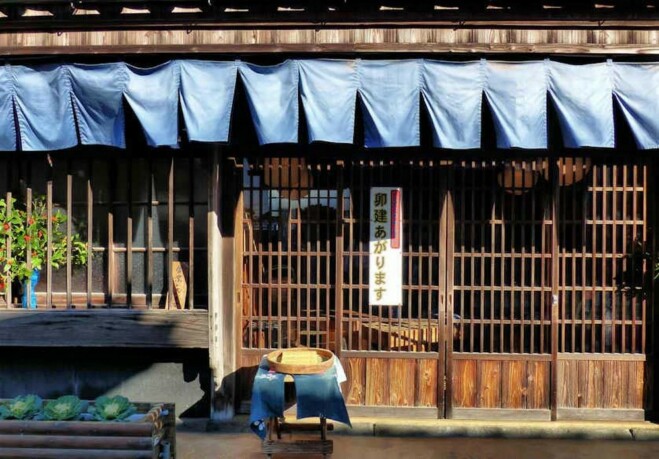
The beating heart of this culture can be found along Kojima Jeans Street, an entire street dedicated to denim. Wooden storefronts, indigo pennants, open workshops, and cutting-edge boutiques line the street.
 Here, you’ll be captivated by the pieces from Momotaro, a cult brand whose jeans, hand-cut and woven on antique looms, have become an absolute benchmark of « Made in Japan. »
Here, denim ages and develops a patina.
Nearby, Kojima Genes perpetuates artisanal production that prioritizes raw materials, design, and durability, all at an accessible price.
And to experience this culture firsthand, you can stay at the Denim Hostel Float, a unique accommodation concept perched on the water’s edge, where every detail evokes the textile soul of the place.
 The small town of Uchiko, on the island of Shikoku, is famous for the production of Ozu washi paper, embodying the very essence of Japanese craftsmanship and the art of papermaking.
This expertise, passed down from generation to generation, makes Ozu washi a precious heritage, renowned for the remarkable quality of its grain and the exceptional fineness of its fibers.
Calligraphers particularly appreciate its fibrous texture, softness, and strength.
More than just a material, this paper embodies an ancient tradition whose exquisite texture and exceptional durability have earned it international renown.
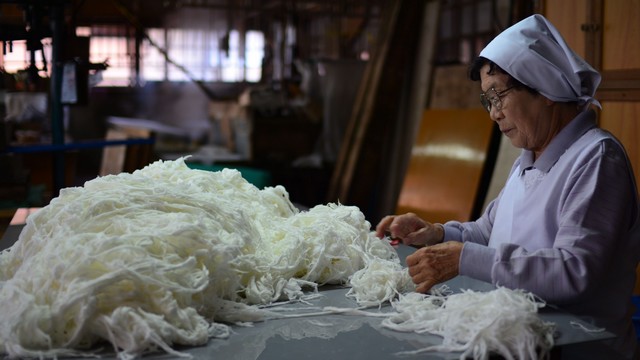
The Tenjin Sanshi workshop is one of the last remaining places producing handcrafted washi paper without the use of machines.
In addition to calligraphy and wrapping paper, the Ozu washi from the Tenjin Sanshi workshop is used to make kites, which have been celebrated for four centuries in a major annual competition held in May.

On the same subject

Why Angola wants to play a major role in global tourism
At the opening press conference of ITB Berlin 2026, Márcio de Jesus Lopes Daniel,...

Destination Dubai : Stuck in chaos
The metropolis of Dubai, a tourist jewel of the United Arab Emirates, finds itself...

Why you should visit the Czech Republic
A land steeped in history and boasting an exceptionally rich heritage, the Czech Republic...


