This is the great paradox of space: we have smartphones millions of times more powerful than the Apollo 11 onboard computer, and yet, landing on the Moon today seems like an insurmountable challenge for many.
Why the Moon became a « demanding mistress » in 2026
50 years ago, landing on the Moon wasn’t just a matter of calculations; it was a craft.
 After the end of the Apollo program, the engineers who knew how to build and operate these machines retired, taking with them thousands of manufacturing « little secrets » that were never documented. Today, we have to relearn how to walk by rediscovering technical processes we had forgotten.
Much More Complex Objectives
In Armstrong’s time, the objective was simple: to land anywhere on the visible face (often in flat, open areas). Today, we’re aiming for the lunar South Pole, a nightmare for pilots with its rugged terrain. We’re trying to land in narrow craters and eternal shadows. The optical sensors are blinded by the contrast between total darkness and the harsh sunlight.
 We no longer want to land 10 km from the target, but within a few meters to stay close to the water ice areas.
The Tyranny of Cost (and the Rise of the Private Sector)
NASA’s Apollo program had a colossal budget (up to 4% of the US federal budget).
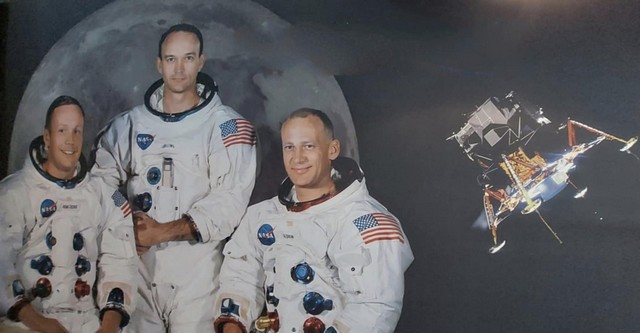 Today, private companies are asked to do the same thing for a fraction of the price.
These new probes (like those of Intuitive Machines or Peregrine) are built with often cheaper components and tested for much shorter periods, which increases the failure rate.
Modern systems rely on laser sensors (LIDAR) and artificial intelligence for autonomous navigation.
If a single sensor malfunctions or the software encounters an unexpected line of code, the mission crashes.
The Apollo astronauts, on the other hand, could take manual control by looking out the window; an automated probe, however, cannot « improvise. »