The figure of the Wandering Jew is one of the most powerful and ambivalent myths in European culture. It is not a biblical figure per se, but a medieval legend that has evolved over the centuries about a man condemned to immortality.
Where does he come from? (The origin of the myth)
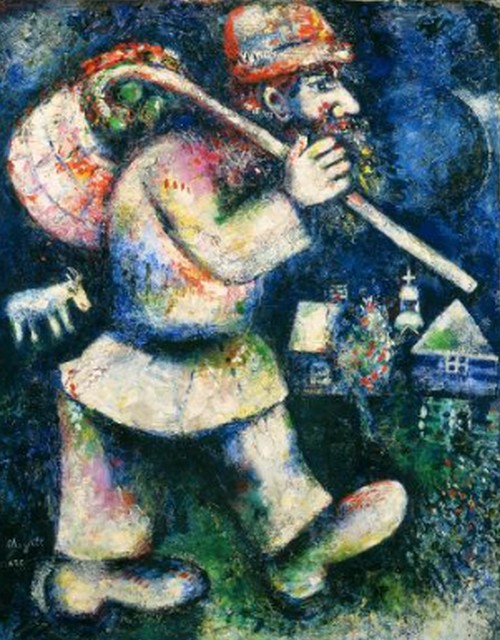 The myth is rooted in a popular interpretation of the Passion of Christ.
According to the most widespread legend (established around the 13th century): As Jesus carried his cross toward Golgotha, he paused for a moment to rest in front of a craftsman’s shop (often named Ahasuerus or Cartaphilus, depending on the version).
The man roughly pushed him away, saying, « Go away! Why are you stopping? » or « Move on! »
Jesus then replied with a calm but unwavering look, « I am going away, but you will walk until I return. »
 At this moment, man becomes incapable of dying and condemned to walk endlessly until the Last Judgment (the Second Coming of Christ).
Where is he going? (His trajectory)
The Wandering Jew has no geographical destination; he embodies perpetual motion. His « destination » is temporal rather than spatial.
Literature makes him appear everywhere: in Germany, in France, in England, and even in America. He is the eternal witness of human history.
In the Middle Ages, he is living proof of the truth of Christianity (he saw Christ) and a figure of the exile of the Jewish people.
In the 19th century (in the works of Eugène Sue, for example), he became a romantic, almost heroic figure: the symbol of suffering humanity or the proletariat on the march.
His wandering will only end at the end of time.
He is thus headed toward the Parousia (the return of Christ), which is the only event capable of breaking his curse and finally granting him the rest of death.
Envoyer des commentaires
Panneaux latéraux
Historique
Enregistrées