The gas dispute between Russia and Europe is one of the biggest geopolitical upheavals of this century. To understand why Europeans found themselves in a critical situation during the invasion of Ukraine, one must examine both Russian strategy and Europe’s willful blindness.
The stakes for Russia: Gas as a weapon of war
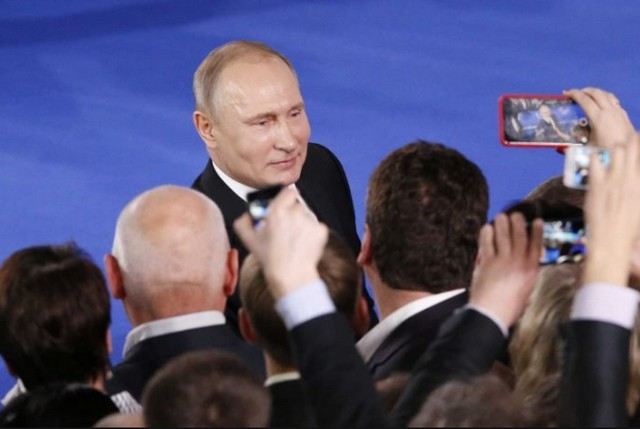 For Vladimir Putin, gas has always been nothing more than a commodity. It’s a lever of power used for two purposes:
Financing the regime: Hydrocarbon revenues represent a colossal share of the Russian state budget and its military-industrial complex.
Divide and rule: By making European countries dependent, Russia thought it could break the unity of NATO and the EU. The idea was simple: « If you support Ukraine, we’ll cut off the heating. »
Why did the Europeans fall for it?
Several factors explain why Europe, and particularly Germany, was caught off guard:
The « Gentle Trade » (Wandel durch Handel) gamble: This was the German doctrine.
It was thought that by integrating Russia into global trade, it would have no incentive to go to war because it would lose its best customers.
This was a miscalculation: Putin prioritized ideology and geopolitics over economics.
The cheap gas trap: Russian gas was extremely inexpensive and abundant. It allowed European industry to be very competitive for 20 years. Breaking free from this dependence would have been costly, and no government was willing to take political responsibility for it before the crisis.
 The lack of a « Plan B »: Unlike other countries, Germany and Central Europe had not invested in liquefied natural gas (LNG) terminals to import gas from the United States or Qatar, thus remaining completely dependent on Russian gas pipelines (Nord Stream).
The poorly managed energy transition: By closing nuclear and coal-fired power plants, gas became the essential transitional energy source to balance renewables (wind/solar).
This inevitably increased dependence on Russia at the worst possible time.
Where do we stand in 2026?
 The situation has changed radically in four years:
The divorce is complete: Europe has managed the feat of almost entirely eliminating its reliance on Russian pipeline gas, at the cost of massive investments in LNG and a reduction in industrial consumption.
The pivot to Asia: Russia is desperately trying to redirect its gas to China via the « Power of Siberia » project, but Beijing is imposing prices much lower than those paid by Europeans, weakening Gazprom’s profitability.
The cost of freedom: Energy in Europe is now structurally more expensive than before 2022, because liquefied gas imported by ship is more expensive than that arriving by pipeline.