The first losers are obviously the populations of the countries involved, innocent victims of bombings. We cannot forget that this conflict has already claimed more than 2,000 lives across all sides. Trapped, the inhabitants have no other option than to flee or hunker down and hope for the end of their nightmare.
Air transport and its corollary, tourism, are also two of the sectors most affected, but there are nuances, and among the protagonists, there are also winners.
The Losers
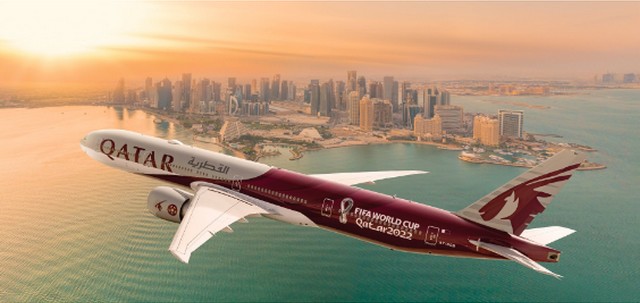 First and foremost, it is the Gulf carriers that are being attacked at the heart of their business.
The two major carriers, Emirates and Qatar Airways, have been almost completely grounded, not only because public airspace is practically unusable, but also because their airports, the source of their pride and prosperity, have been targeted.
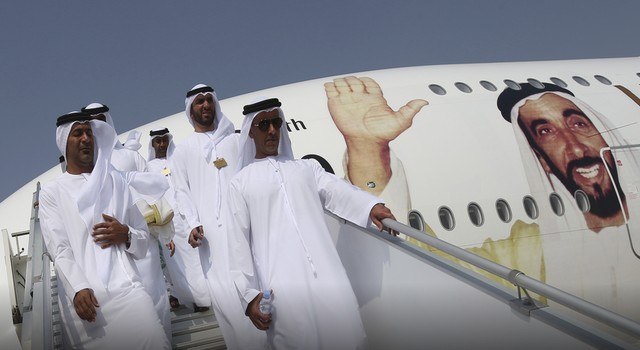 This is not surprising; the concentration of activity at these two major hubs was bound to attract Iranian missiles, even though the Emirates are neutral in this matter.
But the media impact and collateral damage, particularly the inability to repatriate numerous foreign visitors, made them the obvious target.
European airlines are also affected.
 Unable to cross the Gulf airspace, which was the only transit route available to Western carriers to reach Asia, following the ban on overflights of Russia due to the conflict between that country and Ukraine, they are forced to fly around the Arabian Peninsula, adding at least two hours to flight time.
It’s worth noting that an hour of flight time for a long-haul flight costs around $30,000.
Hoteliers are also in the same situation.
For years, the Emirates have heavily promoted their quality of life, the safety they provide to their population, attractive salaries, and the excellence of their facilities.
And this has paid off so well that these countries have become a leading destination, especially during the winter season.
Major hotel chains have therefore established a strong presence, and now their customers are stuck there without necessarily having the financial resources to stay in luxury establishments.
 The recovery will undoubtedly be very long, as the myth of a guaranteed quality of life will need to be rebuilt.
Among the losers, we must also mention travel agents who are powerless to help their clients, despite bearing the responsibility for them.
There will certainly be disgruntled individuals who will sue them, even though they are not at fault.
Insurers undoubtedly have clauses excluding their liability in the event of war, which is quite understandable, but it would be very surprising if they were able to escape unscathed.
 And I could add the aircraft leasing companies, more than half of which are operated in this way, even though, even if they aren’t being paid for by operators who are unable to do so, it’s very difficult for them to redeploy these planes elsewhere.
There are also winners, of course. I’m setting aside the arms manufacturers and major equipment suppliers, which are a separate issue.
In the airline sector, two are coming out on top: Turkish Airlines and Ethiopian Airlines.
 Both companies have organized their operations as hubs, and these hubs continue to operate at full capacity.
It is simply regrettable that they are taking advantage of the situation to inflate their prices to levels that are difficult to justify.
It is not certain that their customers will not remember this when the situation returns to normal.
Chinese carriers are probably the ones profiting the most from this conflict.