The conflict between the Islamic Republic of Iran and the Israeli-American coalition entered its sixth day on Thursday with an unprecedented military escalation, marked by the announcement from the Islamic Revolutionary Guard Corps of a direct strike against Tel Aviv’s Ben Gurion International Airport.
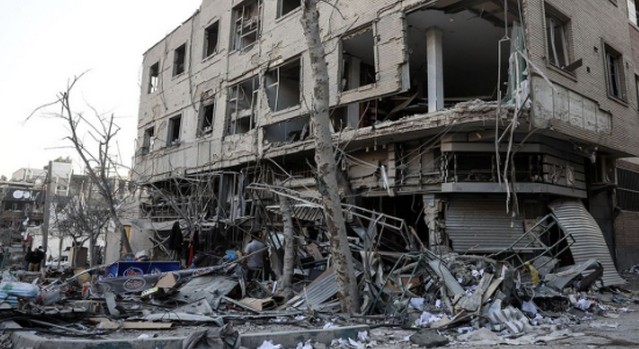 According to a statement from the Tasnim news agency, Khorramshahr-4 heavy missiles, equipped with one-ton warheads, targeted the economic heart of the Jewish state as well as the base of the 27th Air Force Squadron, even as the airport had just received two repatriation flights carrying 340 Israelis.
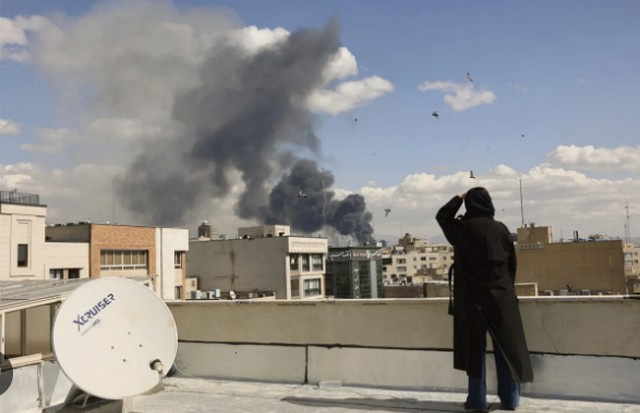 Despite these operations, Israeli air defense systems remain on high alert to intercept further attacks, while the army confirms the identification of multiple ballistic missile threats originating from Iranian territory.
On the diplomatic and humanitarian front, Tehran, through its spokesperson Esmaeil Baqaei, accuses Washington and Jerusalem of « deliberately » targeting civilian areas to inflict maximum suffering, as the Iranian capital and its western outskirts were rocked Thursday morning by another series of massive explosions.
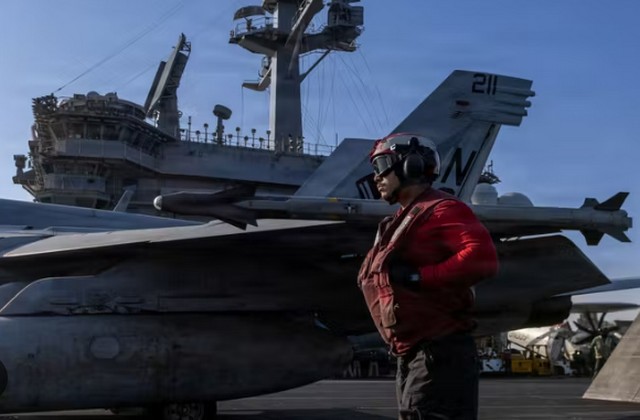 Tensions are now spreading to neighboring countries: Azerbaijan denounces the explosion of an Iranian drone at the Nakhchivan airport terminal, which injured two people. The Iranian army formally denies the attack, but it raises fears of a regional escalation of the conflict. At sea, the Islamic Revolutionary Guard Corps (IRGC) claims to have struck an American oil tanker in the Gulf, a strategic area where the United States is attempting to maintain freedom of navigation despite the offensive launched on February 28.
Faced with this chaos, Europe is mobilizing: Spain and Italy are sending naval assets to Cyprus to escort the French aircraft carrier Charles de Gaulle, joining the Greek and British forces already on the ground, while Giorgia Meloni announces the deployment of air defense systems to the Gulf states affected by Iranian strikes.
Despite its close ties with Tehran, the Kremlin, through Dmitry Peskov, clarified that Iran had not requested any military assistance at this stage, casting doubt on Moscow’s direct involvement in this standoff, which now threatens to paralyze the global economy and energy security.