Speaking at the World Economic Forum in Davos this January 2026, Donald Trump made a major diplomatic shift by ruling out, for the first time, the use of force to seize Greenland, while still firmly demanding « immediate negotiations » for its acquisition by the United States.
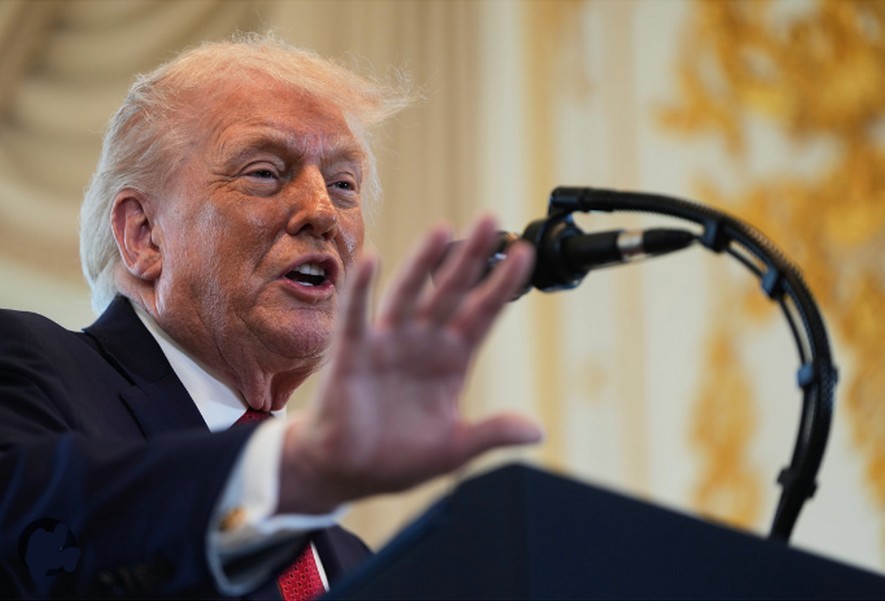 Asserting that only American power is capable of guaranteeing the security of this autonomous Danish territory in the face of growing pressure on Europe’s borders, the American president recalled the show of force carried out in Venezuela two weeks earlier to illustrate the extent of a power he considers underestimated.
 This statement elicited mixed reactions: while the Danish Foreign Minister, Lars Løkke Rasmussen, welcomed the renunciation of violence, he noted with concern that the acquisition ambition remains a top priority for Washington, prompting the Greenlandic government to publish a crisis brochure to prepare its population for the uncertainty.
 On the political front, Polish President Karol Nawrocki expressed his understanding of the American position regarding the Russian threat, while conversely, California Governor Gavin Newsom dismissed the speech as insignificant, attributing Trump’s backtracking on force to the firmness of European leaders and the nervousness of the financial markets.
Indeed, Wall Street reacted immediately with a rebound after the previous day’s fall, a sign that investors are now favoring the economic realities of diplomatic « real estate » over military escalation.
In this 2026 context where polar shipping routes and rare earths are becoming the new nerves of war, Trump’s insistence on what he has already called a « big chunk of ice » confirms that the Arctic has become the center of gravity of American national security doctrine, transforming a territorial dispute into a test of resilience for NATO unity and European sovereignty.