In northern Greece, Central Macedonia unfolds a diverse landscape where modernity meets ancient history, where fertile plains and mountain scenery lead to stunning golden beaches. These beaches, as is often the case, attract the majority of visitors, who foolishly overlook Thessaloniki, the capital and main gateway to the region, as well as western Central Macedonia with its picturesque mountain villages, fertile plains, magnificent archaeological sites, and the iconic Mount Olympus, home of the ancient gods.
This region, one of the largest and richest in the country, offers a rich, rewarding, and often unexpected journey.
Thessaloniki, the Grand Lady of the North
Thessaloniki, the second largest city in Greece, is much more than just an airport; it’s a cultural, cosmopolitan, trendy, vibrant, welcoming, and relaxing city.
 In the very heart of the city, Aristotelous Square (Aristotle Square), which slopes down to the sea, is its vibrant hub, with lively cafes bustling day and night.
In the evening, the sunsets are a must-see.
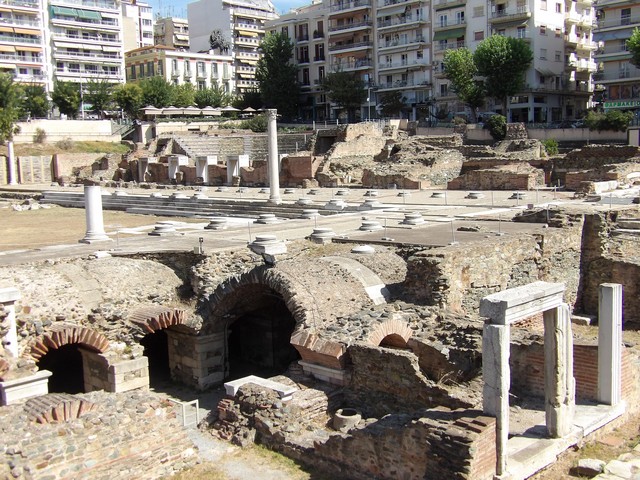 Between the White Tower at the end of the sunlit seafront promenade, the UNESCO-listed Byzantine churches, the city walls, the ruins of the Roman Forum, Hadrian’s Arch, the lively markets like Kapani Market, and the museums, Thessaloniki offers a vast array of discoveries.
And everywhere, cafes and restaurants, from the most elegant to the most traditional taverna, beckon you to stop and enjoy a frappé coffee with a delicious bougatsa, or authentic local cuisine, often accompanied by regional wines or a small glass of tsipouro.
As evening falls, the Ladadika and Valaoritou districts come alive, much to the delight of night owls. Bars, clubs, and terraces pulsate with a variety of music, from traditional rebetiko to electronic rhythms, in a friendly atmosphere that rivals the nights of Berlin, Barcelona, or Ibiza.
As for accommodation, the choice is vast, ranging from grand 5-star luxury establishments like the Electra Palace or the Makedonia Palace, and the colorful NYX (4*), to boutique hotels housed in former Ottoman or neoclassical residences.
All share a common thread: authentic Greek hospitality.
Imathia and Kilkis: Villages Where Time Slows Down
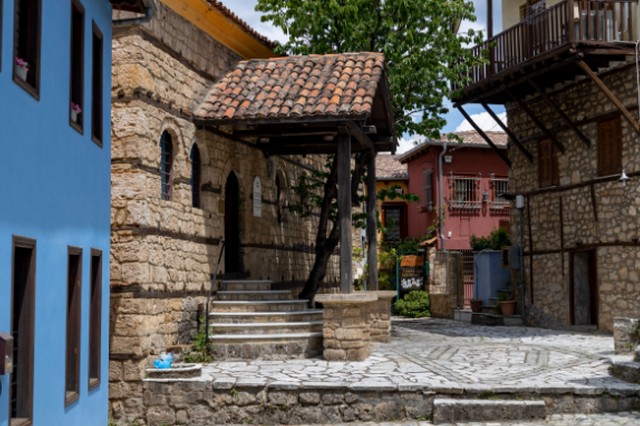 Just an hour’s drive away, the villages in the Imathia and Kilkis regions tell a completely different story of Macedonia: rural, gentle, and deeply rooted in its traditions.
Here you’ll find restored stone houses, shaded squares, cafes where people linger over conversations, and orchards that paint the countryside with color throughout the seasons.
Imathia is known for its succulent peaches and verdant landscapes, while Kilkis retains the soul of inland Greece, with its villages exuding a delightfully peaceful atmosphere.
Axioupolis, on the banks of the Axios River, and Polykastro are two fine examples, two villages where charming hotels and authentic restaurants await visitors.
They are strategic points for exploring the surrounding area, a veritable mosaic of landscapes.
Polykastro is home to a vast British cemetery where thousands of soldiers who fell during the Great War rest, as well as a moving five-sided Inter-Allied Monument.
Not far from there, at the foot of Mount Paiko, the village of Goumenissa is a hub of local traditions and musical festivals.
Here, they produce wines from mountain vineyards and a tsipouro that is the pride of its inhabitants. It’s not uncommon to find yourself seated at a taverna for an impromptu tasting.
Aigai and Europos, Two Gateways to Antiquity
 Central Macedonia is also a major archaeological site.
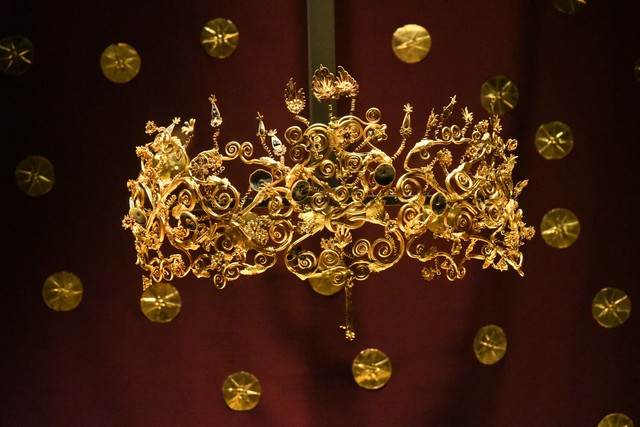
Don’t miss Aigai (Vergina), the ancient capital of the Macedonian kingdom, with its royal tombs, including that of Philip II, the father of Alexander the Great.
The display beneath a reconstructed tumulus is magical.
The coat of arms of Philip II and the gold crowns of his wife are on display.