India has reached a historic milestone in its quest for technological leadership, finally seeking to shatter the persistent perception of a country that excels in software engineering but is incapable of producing fundamental, world-class artificial intelligence models.
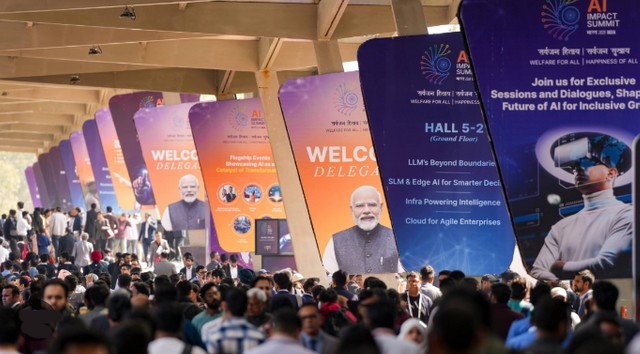 At the recent India AI Impact Summit in February 2026, the startup Sarvam AI caused a sensation by unveiling two new large-scale language models (LLMs) with 30 and 105 billion parameters (105B), marking the country’s most ambitious effort yet to compete with global leaders like OpenAI, Google, and DeepSeek.
Unlike its predecessor, the 2025 Sarvam-M, which relied on the Mistral architecture, these new systems were built entirely from the ground up, specifically optimized for the linguistic and cultural complexities of the Indian subcontinent.
 During the summit, CEO Pratyush Kumar presented impressive benchmarks demonstrating that the Sarvam 105B model offers performance equivalent to, or even superior to, industry heavyweights such as OpenAI’s GPT-OSS 120B or Alibaba’s Qwen3 Next in certain reasoning tests.
While other national players like Gnani.ai, BharatGen (with its 17B Param 2 model), Tech Mahindra, and Fractal Analytics have presented innovative solutions focused on healthcare or education, Sarvam AI stands out for its commitment to offering a high-capacity, general-purpose model.
This technological push is part of the government’s « India AI » strategy, which aims to ensure strategic autonomy in generative AI while providing powerful tools for local businesses to transform India’s digital economy by 2026.