Subcontracting is extremely widespread in air transport. It’s not new, yet it was practically nonexistent in the early days of this sector. Manufacturers, operators, and airports had all integrated the various components of their businesses.
 Airlines even retained cabin cleaning services within their own operations.
Then, as time went on, employees of large companies requested and obtained costly benefits for the airlines. Once engaged in a frantic race to offer ever-lower fares, the airlines were forced to divest themselves of certain activities whose production costs, primarily labor, had become too high.
Then began the heyday of subcontracting, often even with the support of major clients. The economic benefit was undeniable.
Freed from social constraints, the client had a clear advantage in pitting subcontractors against each other—subcontractors whose creation they had, in fact, helped to lower the cost of the service.
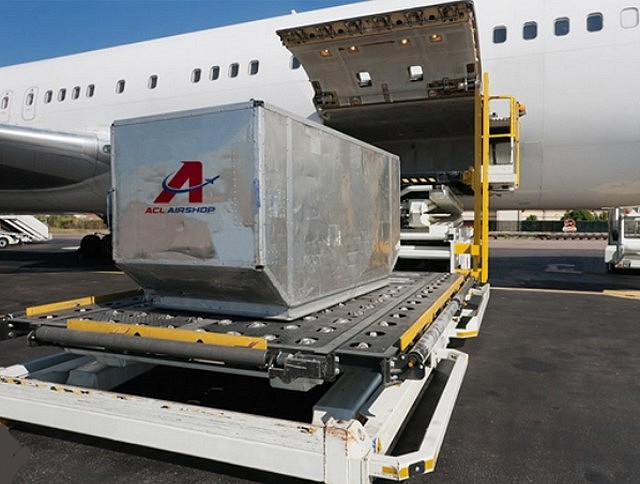 And little by little, these new companies grew so large that they became indispensable to those who thought they could offload such a heavy social burden.
This is how airlines divested themselves of their catering companies and ground handling services, and even delegated a significant portion of their previously owned fleets to large leasing companies.
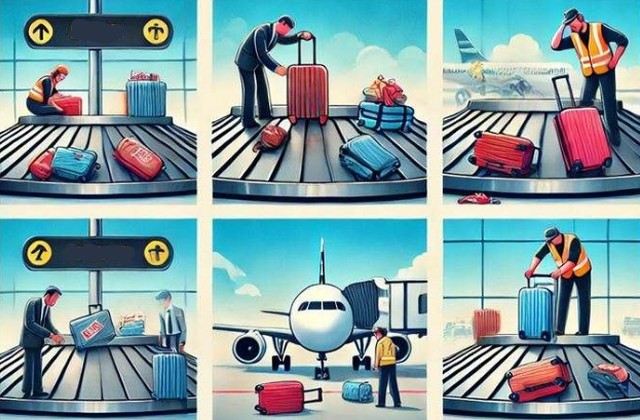 Major airports were not to be outdone, outsourcing, for example, all security operations without necessarily controlling the quality of service, with the sole aim of creating competition among bidders to drive down the price of their services.
And to be able to win the contracts, subcontractors were forced to underpay their staff, which was reflected in the quality of service.
But it didn’t stop there. Aircraft manufacturers have also entered this spiral.
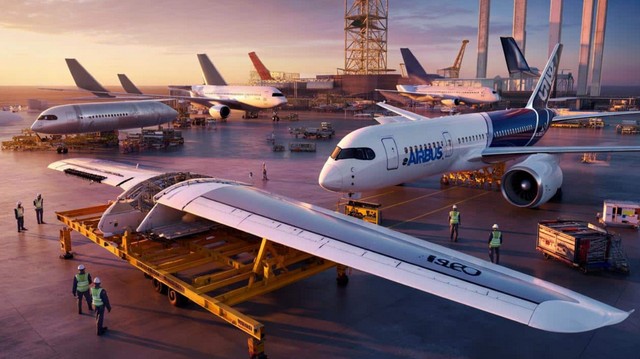 While aircraft manufacturing is so complex that many components must be entrusted to specialists, some of whom are comparable in size to assemblers, a company like Boeing took the concept a bit too far by outsourcing the assembly of certain aircraft types to a third-party company, created specifically for this purpose.
This company, Spirit Aero Systems, suffered from unacceptable production quality issues due to limited oversight by the manufacturer.
So much so that it almost put Boeing in a very difficult position, and the US regulatory authority, the FAA, had to intervene.
And at the end of last year, Spirit Aero Systems was finally reintegrated into the parent company for $4.7 billion, to which must be added the debts it owed to Boeing.
 In total, Boeing had to pay out no less than $8.3 billion, directly or indirectly.
What can we learn from these experiences? First, it is certain that good outsourcing for complementary parts of the business is very useful if it is entrusted to quality suppliers.
However, one must be wary of the power wielded by subcontractors, who can themselves dictate terms to their clients.
 What happens if the baggage handling company, for example, goes bankrupt or if its employees go on strike? Some major airports have been nearly paralyzed by work stoppages by their subcontractors.
Clients must be very careful not to impose excessive demands and to allow their service providers to earn a reasonable living.